American soccer is undergoing a tactical transformation, where speed, counterattacks, and intelligent transitions are reshaping the way the game is played and analyzed.
The Rise of Tactical Intelligence in American Soccer
In recent years, the tactical landscape of American soccer has evolved rapidly. What was once a league primarily known for its athleticism and physicality is now becoming a laboratory for strategic innovation and data-driven performance analysis. Clubs in Major League Soccer (MLS) and even youth academies are embracing advanced tactical systems inspired by European and South American models, yet uniquely adapted to the American context.
This evolution is not accidental. The influx of international coaches, the influence of analytical departments, and the growing sophistication of performance technology have all contributed to a deeper understanding of game dynamics. Among the most noticeable trends is the increasing importance of counterattacks and quick transitions—strategies that maximize speed, precision, and coordination in moments of defensive recovery.
Counterattacks: Turning Defense into Instant Offense
The counterattack has long been a powerful weapon in world football. From the rapid transitions of Jürgen Klopp’s Liverpool to the vertical play of Real Madrid under Carlo Ancelotti, the art of turning defense into offense within seconds has defined modern soccer. In the United States, this approach is finding fertile ground due to the athletic profile of players and the open nature of many MLS matches.
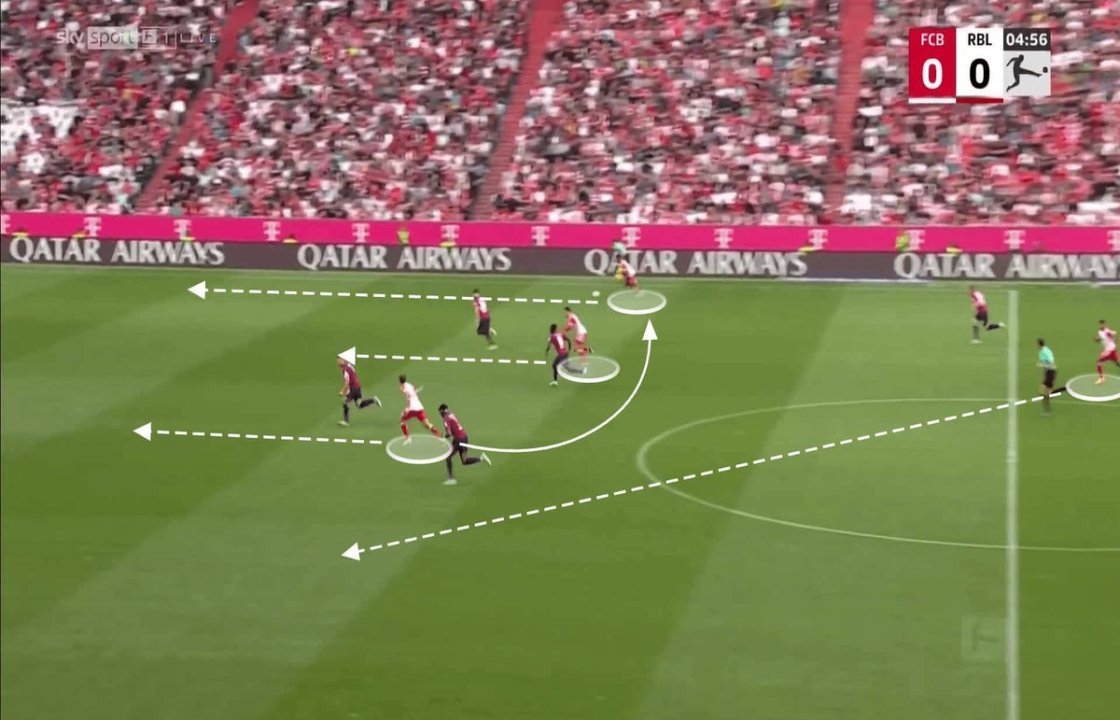
American teams are beginning to master the timing of counterattacks. Instead of simply clearing the ball after regaining possession, the new approach involves structured fast breaks supported by predefined passing lanes and spatial awareness. Players are trained to recognize triggers—such as an opponent’s misplaced pass or a defender stepping too high—and instantly react as a unit.
Moreover, video analysis and tracking data are being used to measure the efficiency of counterattacks. Metrics like progressive runs, transition speed, and expected goals from fast plays (xGf) allow analysts to quantify how well a team executes under high-pressure, time-sensitive conditions. These insights are not only improving team tactics but also reshaping the way players think about their roles during transitions.
The Power of Speed and Precision
Speed in modern soccer is no longer limited to sprinting ability—it’s also about speed of thought, decision-making, and execution. In American soccer, players are being trained to combine physical acceleration with mental agility. Quick transitions depend on the ability to process information and make the right pass within fractions of a second.
Teams such as LAFC and Philadelphia Union exemplify this modern approach. They use high pressing to provoke turnovers and immediately attack through dynamic movement and overlapping runs. Their tactical philosophy is built around exploiting numerical advantages before the opposing defense has time to reorganize.
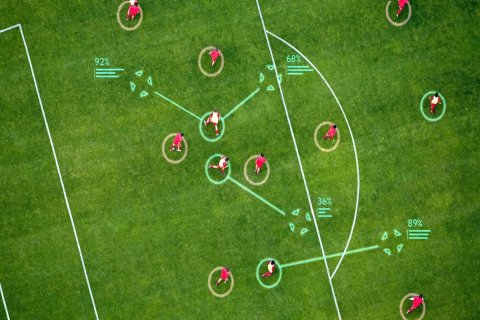
Furthermore, the growing integration of data science is refining how coaches teach speed-oriented play. Using positional data and AI-assisted visualization tools, coaches can identify optimal passing patterns and zones of exploitation in transition moments. These analyses help teams maintain balance while committing players forward, ensuring that attacking aggression doesn’t lead to defensive vulnerability.
Quick Transitions and Graph Neural Networks: A New Frontier in Analysis
Perhaps the most fascinating development in this tactical evolution is the emergence of Graph Neural Networks (GNNs) in soccer analytics. GNNs are a type of artificial intelligence capable of modeling complex relationships within dynamic systems—such as how players move and interact during transitions.
Researchers have begun using GNNs to analyze effective counterattacks by examining the network structure of passing sequences. Each player is treated as a node in a graph, and every pass or movement becomes a connection. This allows analysts to understand how information and movement flow across a team during a counterattack.
For example, a study on counterattacking efficiency using GNNs revealed that successful transitions often rely on short, high-value connections between players who anticipate movement patterns. Instead of random bursts of speed, effective teams show cohesive coordination, where spatial relationships between players remain stable even in high-tempo scenarios.
By applying this technology, analysts can simulate how different tactical setups—like a 4-3-3 versus a 3-5-2—affect the structure and flow of counterattacks. They can also identify the key players who act as “connectors” in these fast breaks, offering valuable insights for both training and recruitment.
This type of research is beginning to influence coaching methodologies in the U.S. As teams embrace AI-assisted performance tools, the integration of tactical data visualization and machine learning models is making American soccer more sophisticated than ever before.
From European Influence to American Innovation
While the concepts of counterattacking and quick transitions are well-established in Europe, American teams are giving these strategies their own identity. The mix of multicultural playing styles and emphasis on athletic development has created a distinctive tactical flavor that blends directness and creativity.
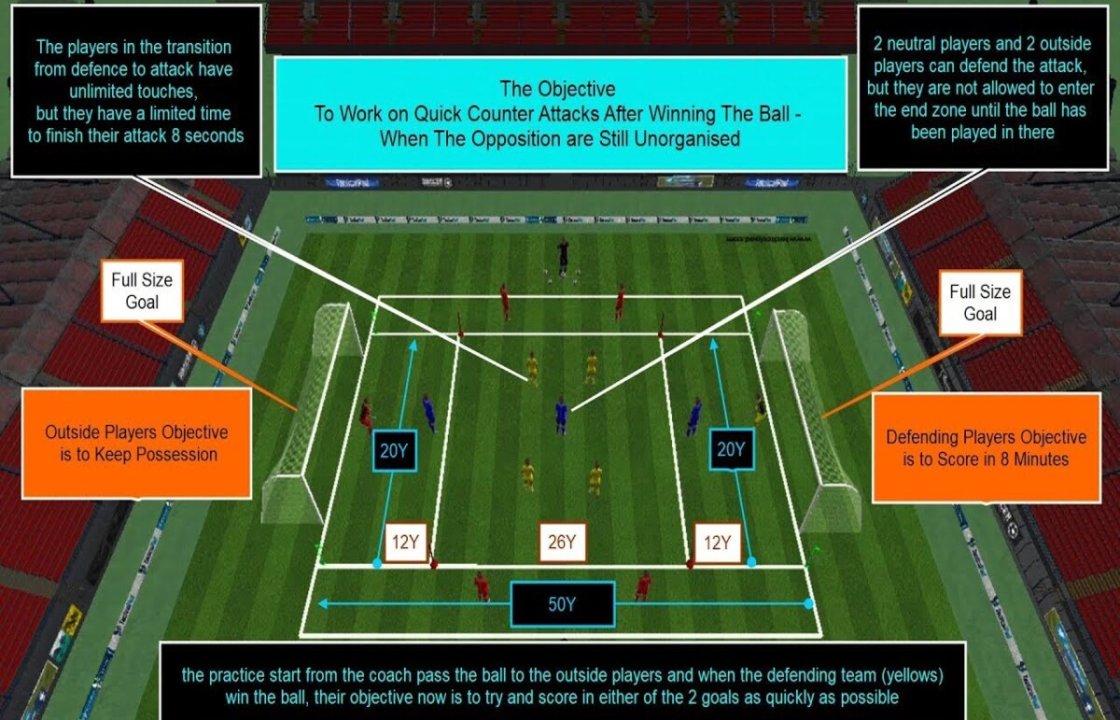
In MLS, for instance, the diversity of coaches—from Spain, Argentina, and the U.S.—has led to a fusion of philosophies. Some prefer the methodical buildup associated with positional play, while others thrive on vertical chaos, pressing high and attacking with speed. The result is a league where tactical experimentation is encouraged, and players are exposed to multiple systems that enhance their adaptability.
At the national level, the U.S. Men’s National Team under Gregg Berhalter has demonstrated a growing emphasis on structured pressing and controlled transitions. Younger American players, many of whom are now competing in European leagues, are learning to combine tactical intelligence with the physical dynamism that has long characterized American soccer.
The Future of Tactical Development in the United States
As soccer in the U.S. continues to grow, the next step lies in merging tactical awareness with technological literacy. The future player must understand both the science of movement and the art of decision-making. Training environments are increasingly data-enriched, with real-time feedback systems helping players adjust their positioning, tempo, and timing.
We are entering an era where artificial intelligence, wearable technology, and spatial analytics converge to produce more informed coaching decisions. The combination of human intuition and machine precision will push American soccer toward higher tactical maturity, making teams more efficient, adaptive, and difficult to predict.
Ultimately, the success of this new wave of tactics will depend on education. Coaches, analysts, and players must all learn to speak the same language of performance and data. When that happens, American soccer will not just imitate the global game—it will innovate it.
Connecting the Tactical Revolution to SIA Academy
At SIA Academy, these emerging tactical concepts are not abstract theories—they are integral to daily training. Our programs emphasize quick transitions, intelligent pressing, and game-speed decision-making, ensuring players develop both the physical and cognitive tools to succeed in modern soccer. Using video analysis, GPS tracking, and AI-assisted performance evaluations, we help athletes understand not only what to do but why and when to do it.
Just like the professional teams adopting advanced analytics and tactical modeling, we prepare our players to thrive in a data-driven soccer environment. Whether analyzing counterattack structures or improving transition speed, our training sessions mirror the demands of the evolving game. At SIA Academy, we believe that mastering these emerging tactical strategies is essential for shaping the next generation of intelligent, adaptable, and competitive players.